

What did Starmer do for young people?
As Keir Starmer leaves Downing Street, IF Intern Anton Kui looks back at two years of Labour under Keir Starmer through the lens of intergenerational fairness.
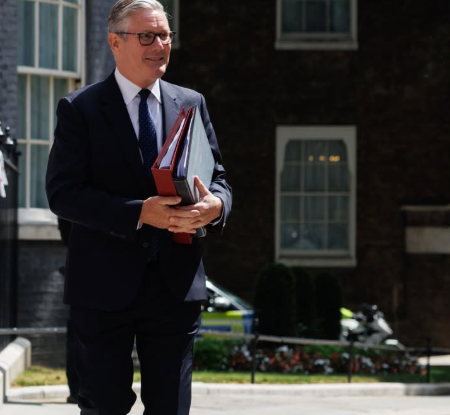
Starmer in review
Starmer handed the keys over to Burnham this week, claiming that he leaves the country “in better shape than I found it”. The question that arises is: better for whom? Over the past two years, Starmer’s government spoke often about change for young people, with some of it materialising, but most of it not. Let’s take a look back at Starmer’s premiership, the impact he had on young people and the legacy he will leave behind
Homes for some
Homeownership among young people has collapsed over the past two decades. Starmer pledged to build 1.5 million homes over five years in an attempt to address this and restore homeownership to up to 70%. However, by March 2026, the number of net additional homes built amounted to around 342,100, less than a quarter of the target. At the current rate, it would take several more years for Starmer’s target to be reached.
There are multiple reasons behind this, many outside the government’s control. Rising material costs, labour shortages and planning issues have all contributed to the delay. The conflict in the Middle East raised energy prices and increased uncertainty, leading construction companies to slow down land acquisition. Given all this, reaching Starmer’s goal is becoming increasingly implausible, with little sign of house prices becoming more affordable.
Where the government did deliver was for renters. The introduction of the Renters’ Rights Act 2025 was the biggest reform to the private rented sector since the 1980s. The Act abolished no-fault evictions, rental bidding wars and demands for large upfront payments. The new system also converts all tenancies to open-ended rolling contracts, giving greater flexibility to younger people and students, and less power to landlords.
The graduate’s rising bill
Under Starmer, students have become worse off. In 2025, tuition fees in England rose for the first time since 2017, from £9,250 to £9,535. In the same Budget, the government froze the repayment threshold so that, as wages rise, more graduates are pulled into repayment and those already repaying pay more. The IFS estimates that this change will add around £3,000 to the average graduate’s lifetime repayments.
In addition, the government has made no attempt to reform the current student loan system, which leaves graduates with an average of £53,000 in student debt, a figure that is only set to grow with higher fees. Starmer acknowledged that the system was unfair, but no action was taken besides a token cap on interest rates for Plan 2 loans at 6%. Most graduates will remain stuck in a debt trap, with little hope of paying off their loans.
A generation out of work
Starmer’s failure is most visible in the employment figures. Youth unemployment reached an 11-year high of around 740,000, while the number of young people not in employment, education or training (NEET) passed one million for the first time in over a decade. A government-commissioned review by former Labour minister Alan Milburn warned of a “generational fault line”, finding that, for every £1 spent helping young people into work, roughly £25 is spent on benefits.
Much of this predates Starmer, with the NEET problem having been on the rise for years. However, his government failed to respond adequately. Starmer introduced a Youth Guarantee and a £3,000 Youth Jobs Grant for employers taking on young workers. But this one-off subsidy struggled to address the permanent increase in the cost of employing young people.
A year earlier, Starmer had increased employer National Insurance contributions and raised the minimum wage for under-21s, policies that the Resolution Foundation found made hiring young people even more expensive for businesses. While IF supports higher minimum wages for younger workers, combining this with the National Insurance rise at a time of already high youth unemployment was misjudged.
Spending on the old, not the young
One of the more controversial moments of Starmer’s premiership was the announcement of cuts to Winter Fuel Payments in 2024. The policy aimed to shift the payment from a universal benefit to a means-tested one. Before the change, around 11.6 million people received the Winter Fuel Payment, at a cost of £2 billion. It was rightly criticised as poorly targeted, paying the same sum to a millionaire pensioner as to someone living solely on the State Pension.
However, the execution of the policy was poor. Eligibility was restricted to those receiving Pension Credit, reducing the number of recipients by over 10 million. Government modelling estimated that the change would push an additional 50,000 to 100,000 pensioners into relative poverty each year through to 2030.
The severe political backlash forced the government into a complete U-turn, announcing that all pensioners of State Pension age would receive the payments from the winter of 2025/26. This not only hurt the credibility of Starmer and Labour, but also prevented any subsequent effort to tackle the ballooning welfare bill for older generations.
Starmer did have some clear successes. In the 2025 Budget, the government abolished the two-child benefit cap, which had limited means-tested support to a family’s first two children and applied to around 1.6 million children in larger families. The change is expected to lift roughly 450,000 children out of poverty by 2029/30, at a cost of about £3 billion, making it one of the few decisions of the premiership to direct significant new spending towards the young rather than the old.
Younger families also benefited from childcare. From September 2025, the government finalised the expansion of free childcare, giving working parents of children as young as nine months up to 30 hours a week, worth as much as £7,500 a year per child.
The government also handed an extra £29 billion a year to the NHS, a record investment from Chancellor Rachel Reeves. Though this spending may be justified in its own right, health spending rises steeply with age, meaning that much of it flows towards older generations. On the wider question of pensions, Starmer maintained the triple lock, which raises the State Pension each year by the highest of 2.5%, inflation or earnings. IF research has long argued that this is intergenerationally unfair, with the OBR projecting pensioner welfare spending to rise from £151 billion in 2024/25 to £196 billion by 2030/31. While the young received modest help under Starmer, far larger sums continued to flow towards the old.
A voice but not a vote
Starmer introduced the Representation of the People Bill in February 2026 to lower the voting age to 16, a reform IF has long campaigned for. But the bill did not pass before he left office, leaving its future uncertain under the new prime minister.
Instead, his government was readier to act on young people’s behalf than to hand them power. The government moved to ban social media for under-16s from 2027 in response to growing concerns over online safety and the harms of algorithms and infinite scrolling. It was not yet willing to give them the vote, but was willing to make major decisions on their behalf.
Better for whom?
Starmer’s government identified the right problems affecting intergenerational fairness, but rarely acted on them. The new Renters’ Rights Act and the end of the two-child benefit cap were significant, though these represented the extent of his major policy changes.
Starmer recognised the unfairness of the student loan system, yet made no attempt to reform it. He set a housing target that quickly fell off course. His government acknowledged the youth unemployment problem, but then raised the cost of employing young people at the very moment it was promising to help them into work. When he tried to reduce pensioner spending through the Winter Fuel Payment cut, poor execution forced him into a U-turn, leaving the system largely unchanged. All the while, he kept the triple lock firmly in place.
It is clear that Starmer’s government directed a great deal of money towards services and benefits that disproportionately support older generations. Starmer also failed to address the underlying imbalance between the taxation of earned and unearned income, which disproportionately disadvantages younger people. This will leave younger and future taxpayers carrying much of the cost of these policies.
So, better for whom? Starmer may well leave the country in better shape for some. For the young, the honest answer is that he leaves them talked about more than before, which is important, but not necessarily much more secure. Whether that changes now falls to Andy Burnham.
Help us to be able to do more
Now that you’ve reached the end of the article, we want to thank you for being interested in IF’s work. We’re really proud of what we’ve achieved so far. And with your help we can do much more, so please consider helping to make IF more sustainable. You can do so by following this link: Donate.
Photo by Sasun Bughdaryan on Unsplash.